
Finding Hampton Resident Records
Hampton keeps no single public list of every person at every address. The right starting point depends on the question. The Assessor ties a parcel to an owner or taxpayer. Recorded instruments name the parties to a transaction. A dated directory or census can place a household in an earlier period. Court, professional, and vital records answer still other questions, and some carry access limits. Treat an owner, a court party, a licensee, and a listed householder as separate roles. Only another record should tie them together.
Keep the source date beside every name in a Hampton residents directory search. A transfer row from one year says nothing about a directory entry from another. For a current address, write down the parcel number and legal description first. Then hunt for deeds. For an older person, keep the printed street, the locality label, and the page number. Hampton absorbed Elizabeth City County and Phoebus in 1952. Older records may still carry a place name that no map shows today.
- Start with an address in the Assessor’s property search, or with a dated directory entry when the question is historical.
- Save the parcel ID, situs address, legal description, date, and the role shown for each named party.
- Check an independent record, such as a recorded deed, court index, obituary, or license record, for the same name and time period.
- Use the Hampton Registrar only through its authorized voter route or the statute-governed list process.
- When a public record is not online, request the existing record from the correct Hampton office with a narrow date and subject description.
Hampton Resident Records Offices
Hampton is an independent city. Its key custodians are city and state offices rather than a county government. The Circuit Court Clerk holds recorded land instruments, probate material, and marriage licensing records. The office also keeps circuit files. The Assessor manages the public real-estate trail. The Registrar runs election records, with separate rules for self-service status checks and voter-list access. Each office can tell you where a record sits. It might be online, at a public terminal, or behind a focused request.
No office covers everything. The Assessor cannot list every household member. A deed index may name a party without showing a present address. The Registrar holds voter rolls but must honor statutory protections. Ask each office for the correct underlying record, and the reply will be sharper.
Hampton Assessor of Real Estate
One Franklin Street, Suite 602
Hampton, VA 23669
757-727-8311
Go to the office that holds the record, not to a general request for a person profile. The address-focused chain gets fuller treatment in the Hampton by-street directory.
Hampton Parcel Records First
With a known address, the current CivQuest route is Hampton's strongest location anchor. The Assessor points users to the city's property and GIS system. Legacy Parcel Viewer help describes the tabs a parcel card may hold. Those tabs cover general details, improvements, transfers, assessments, tax information, city resources, scanned documents, and a crime-statistics area. Interfaces change, so read a parcel result as a property record rather than a promise that every old tab survives.
Start from the street number and name. You can also begin with an owner name, a parcel or property ID, or a map selection. Check the returned polygon, legal description, subdivision, and any photo or sketch. Transfer and assessment tabs supply a date frame. City Resources can lead to zoning, voting, service, and neighborhood detail. A neighboring polygon on the map may simply be a road, water, or public right-of-way.
| Parcel field | Why it matters |
|---|---|
| Street address or map selection | Finds the physical property and its mapped polygon. |
| Owner name | Supplies a taxpayer or ownership lead, not a current occupancy finding. |
| Property ID | Provides a stable key for transfer PDFs, maps, and clerk research. |
| Legal description | Helps match an old deed when a street label or number changed. |
A parcel is the mapped unit of land. The situs address is its physical spot. A tax mailing address may belong to an owner living elsewhere. Keep those labels apart. Otherwise an ownership record gets misread as a list of Hampton residents. The Hampton Assessor links the current property route used for this search.
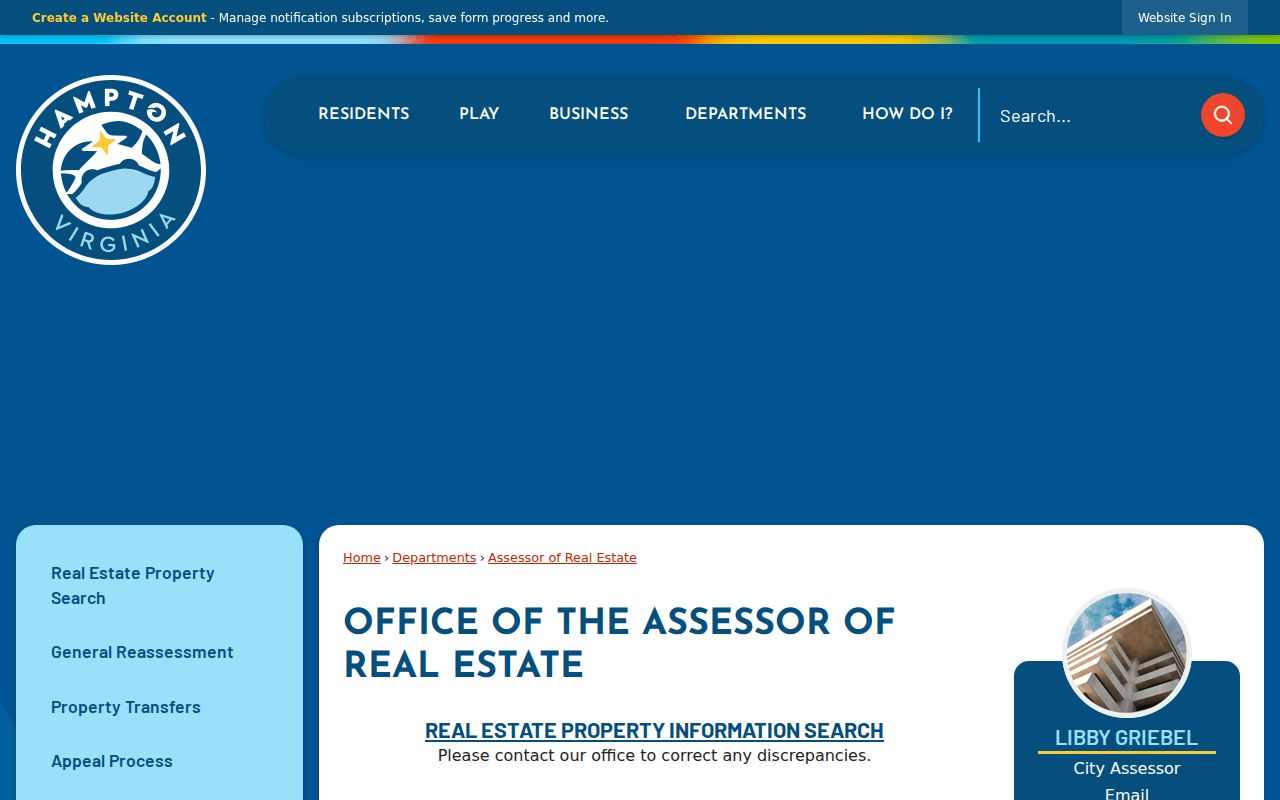
The Assessor screen only starts the address trail. Follow it with a transfer report or a Clerk instrument, not an assumption about who lives there.
Authorized Hampton Voter Access
Virginia's Citizen Portal is not a public name directory. Its status form asks for a first name, last name, date of birth, the last four Social Security digits, and a locality. It also requires a certification that the requester is the voter or is authorized. It lets a voter check an address, polling location, voting history, or related status. It cannot serve as an arbitrary-person search, and it offers no street list.
Public registrar lists follow a different path. Virginia law allows office inspection of certain list information. Va. Code §24.2-405 limits who may receive a full copy. It also limits its permitted use, redistribution, and online publication. The Hampton Registrar can explain the current procedure. Protected addresses, Social Security data, and day and month of birth never appear in a residents directory result. Virginia's authorized voter-status form shows the certification-based route.
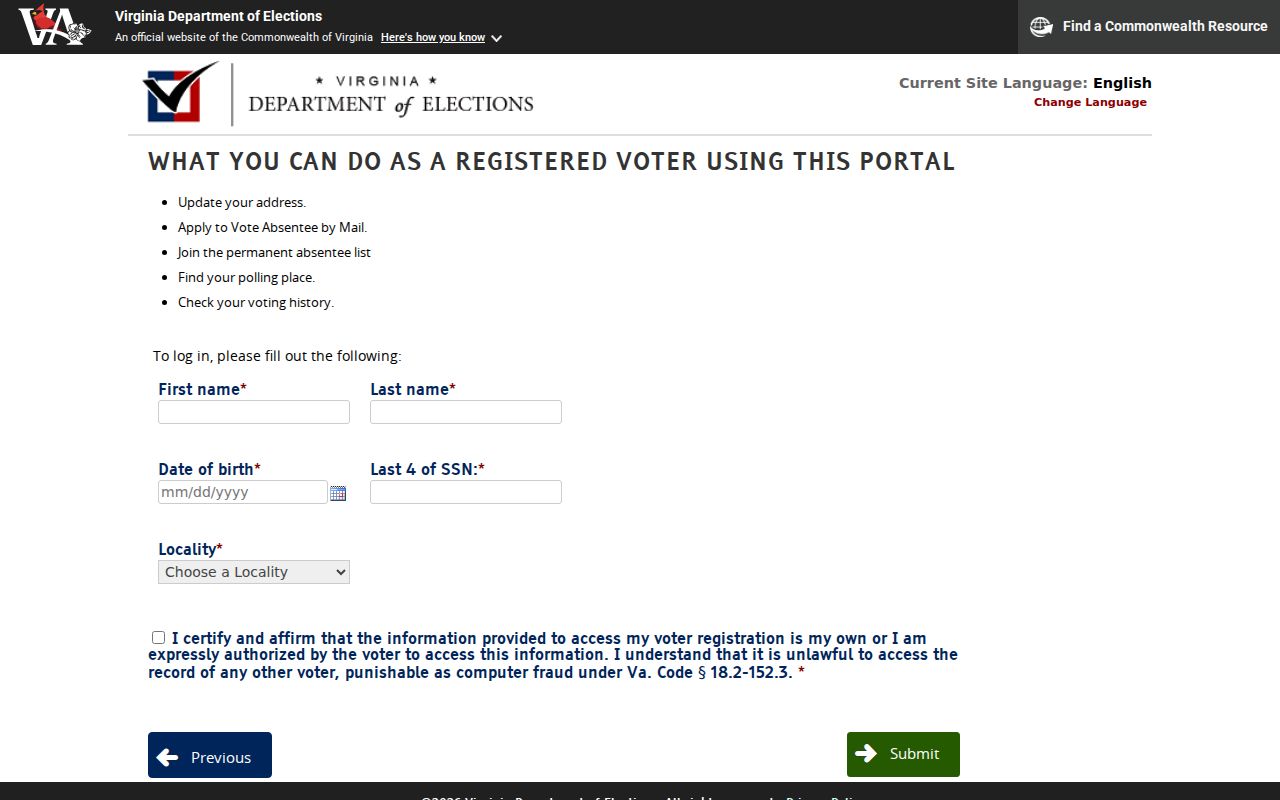
Those identity fields show why a voter record demands a lawful, person-specific purpose. A broad directory search simply is not that.
Current Hampton Directory Sources
Current Hampton records work best as separate rolls. Each roll documents one relationship: a parcel, a filing, a public role, or an election process. The Hampton residents directory method is simple. Match the source to the narrow question, record its date, and compare a second source whenever identity matters.
| Hampton source | Relationship shown | Custodian | Access route |
|---|---|---|---|
| CivQuest and Land Book | Parcel owner, taxpayer, assessment | Hampton Assessor | Current portal and annual PDFs |
| Property transfer PDFs | Grantor, grantee, property ID, date, amount | City of Hampton | Calendar years posted 2020-2026 |
| Recorded instrument index | Grantor, grantee, trustee, estate, or other party | Hampton Circuit Court Clerk | Clerk counter and SRA/COVERS rules |
| Authorized voter route | Voter’s own status and election context | Registrar and Virginia Elections | Certification or statutory list process |
| DPOR and SCC records | Public license or entity role | Virginia agencies | Official online lookup |
A court party, business officer, or license holder can act in Hampton without living at the address shown. Roles are not residences. The Hampton resident lookup shows how to compare those roles without collapsing them into a single profile.
Hampton Address Resource Crosswalk
City Services for My Address adds civic context once an address is chosen. The city workflow takes a street number plus an autocompleted street name. Terms are accepted first. Its resource tab can surface zoning, wetlands, service schedules, a Neighborhood Commission district, voting information, legislative districts, and a crime-statistics area. Those layers show which Hampton office or district covers a property. None of it proves residency. Read the tabs as geography, not identity.
Hampton's GIS works well as a geography check. A ZIP polygon, voting precinct, parcel, and neighborhood district can overlap without sharing a boundary. Postal questions go to USPS. Ownership goes back to the parcel and deed. That distinction matters in waterfront, institutional, and historic-place areas of Hampton.
Note: Save the street number, matched street name, parcel ID, and date used. Compare records from different city systems afterward.
Verify Hampton Names Independently
A single name is rarely enough. Start with the full name, spelling variants or initials, a date range, and the location label used at the time. Events before the 1952 consolidation need the older names too. Those names are Elizabeth City County, Phoebus, Old Point, Kecoughtan, Kecoughton, and East Hampton. Search Hampton alongside each of them. A printed directory may carry a historic place name. The modern parcel may still sit inside Hampton.
Then add a source with a different purpose. Compare a deed party with a directory address. Compare an obituary with an open vital index. Compare a court party with a public professional record. Read the whole result. A court result can list a party name, case number, case type, filing date, final-order date, and action. None of that makes a similar name the same person. Time, address, or other lawful corroboration still has to line up.
- Roll
- A list maintained for one administrative purpose, not a universal resident list.
- Index
- A finding tool that identifies a record; it may not include the document image.
- Criss-cross directory
- An address-to-name section when a printed volume includes one; it must be verified volume by volume.
- Legal description
- The parcel wording used in a deed or land record, often more durable than a street address.
Hampton Courts and Vital Paths
Virginia Courts case information opens a path to public Hampton circuit and General District Court records. Searches can filter by locality, party name, case number, and hearing date. The Clerk counter and public terminals are the fallback. Juvenile, sealed, and other protected matters stay out of general search results. Circuit land-record images carry separate SRA/COVERS subscriber and local-clerk rules. An online index is not the official record itself.
The Virginia Department of Health holds vital certificates. Birth records open after 100 years. Death, marriage, and divorce records open after 25. Newer records follow eligibility and identification rules. The current application lists a $15 search or copy fee, while an older form shows a different amount. Confirm the live fee and timing before sending payment. Hampton's Clerk and the Library of Virginia help with local and historical lookups.
Hampton publishes no official online jail roster. For a current local custody question, the Sheriff or Inmate Records unit is the direct route. State and federal locators carry their own scope and disclaimers.
Virginia Department of Corrections locator guidance shows one state route with a narrow custody scope.
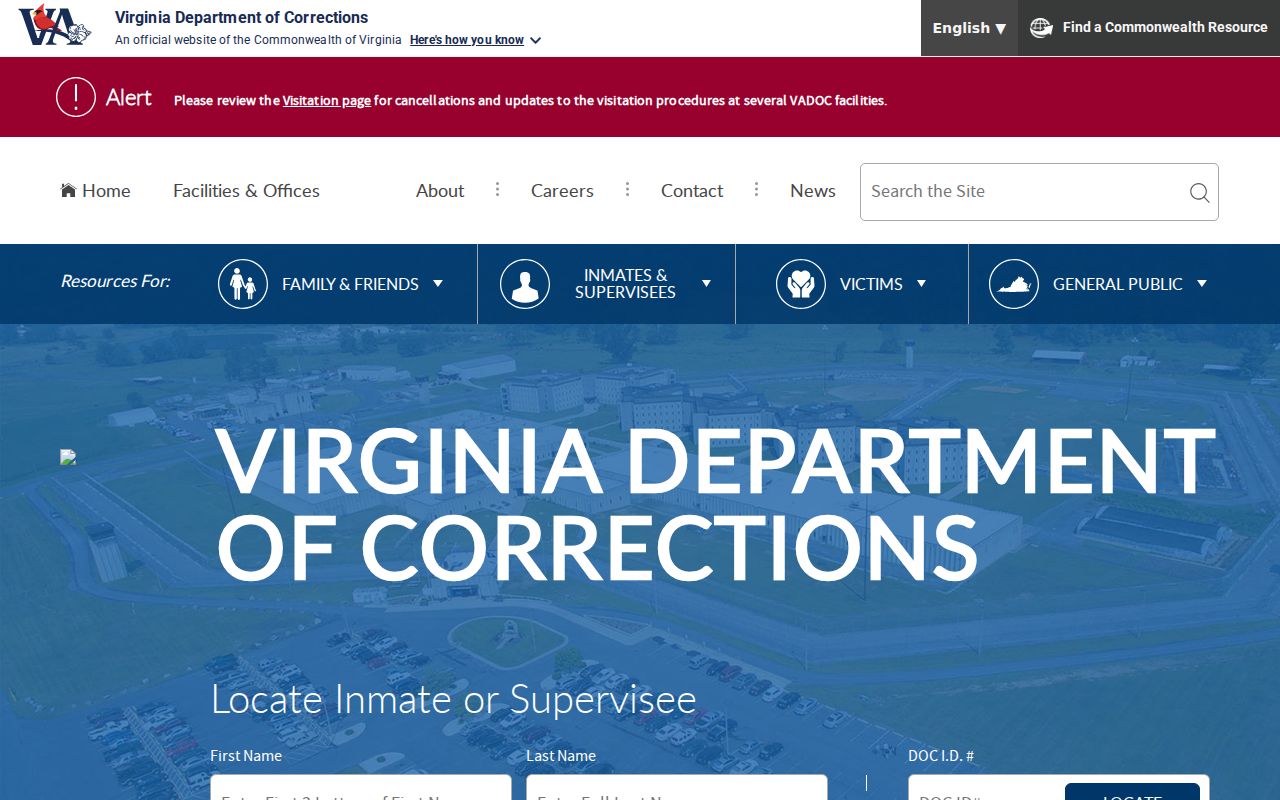
A locator result shows a public custody status at one point in time. It is not a criminal history or a substitute for the court record.
Historical Hampton Resident Directories
Hampton's historical directory shelf is prized for the place labels that survived consolidation. Old names still open doors. Start with the Hill volumes. The Hill Directory Company run covering Newport News, Hampton, Phoebus, and Old Point begins with 1897-1898 and continues in detailed volumes through 1929, plus a later 1944-45 catalog title. Entries can give a printed name, address, occupation or status descriptor, and business listing. Each volume is an annual snapshot.
The shelf goes beyond directories. Hampton Public Library Special Collections keeps Hampton and Newport News directories alongside newspapers, yearbooks, census indexes, maps, local wills, deeds, vital references, and the Daily Press Obituary Index. Digitization is uneven. FamilySearch catalog films, Library of Virginia microfilm, the History Museum, and Hampton University Archives widen the search when the local shelf or an image is not online. The dedicated Hampton city directories collection page gathers the film and access details in one place.
Elizabeth City County Search Labels
Hampton has been an independent city only since 1952. That year it absorbed Elizabeth City County and the community of Phoebus. Before then, the county was the jurisdiction of record. Older deeds, wills, chancery causes, marriage records, newspapers, and directory titles may be indexed as Elizabeth City County material. Some entries carry a historic community name instead. A Hampton-only search that returns nothing should prompt you to change the locality term rather than conclude the record is absent.
Historic records carry real gaps too. The Library of Virginia documents losses tied to wars and the 1865 Richmond evacuation fire. A broken deed trail is common. Sideways sources help: re-recorded deeds, chancery causes, surveys and plats, probate records, land books, newspapers, and church or cemetery leads. The Elizabeth City County chancery collection has digital images spanning 1747 through 1913. That fills gaps the missing deed books leave.
Hampton Library Archive Leads
Hampton's Main Library keeps its Special Collections room at the rear of the second floor, 4207 Victoria Boulevard. Genealogy computers there work best by appointment. The room's hours differ from the library's general hours. Staff ask researchers to call before a visit. A mail-only preliminary research request covers a specific name, date, or event. It needs a letter and a self-addressed stamped envelope; email and phone requests are not accepted.
The Hampton History Museum catalog adds oral histories, photographs, and maps. It also allows browsing by location. Hampton University Archives supports searches by record group, location, date, title, description, subject, and keyword. Its guidance sends individual names to the Subjects field. These collections pair well with a residents directory. They explain the house, neighborhood, school, or institution around a bare name. The library's Virginiana and Genealogy page describes the local historical holdings and how to reach them.
Hampton FOIA Record Requests
Virginia's Freedom of Information Act, Va. Code §2.2-3700 et seq., is the public-records fallback in Hampton. Under §2.2-3704, a public body generally answers within five working days, providing records, denying them, responding in part, stating none exist, or claiming more time. Specificity matters. Name the Hampton department, the record type, an address or parcel ID, the date range, and a preferred electronic format.
Hampton takes requests through GovQA. Mail, fax, email, and phone channels are designated too. Reasonable costs can apply, and the city may require a deposit for a large estimate. FOIA cannot force a new database. It also cannot compel staff to compile names from scattered files. Protected voter, vital, juvenile, confidential-address, and investigative information stays exempt. Ask for a redacted copy when only part of a record is exempt. The GovQA request portal takes online submissions.
The portal fits a defined record that is not published online. It cannot generate a new resident list.