
Hampton Resident Lookup Records
A name by itself tells you little in Hampton. The county holds records for many reasons, and a smart resident lookup keeps each role separate. Hampton courts can show a party to a case. Hampton role records can confirm a public credential. The Hampton CivQuest GIS and Assessor files link an owner or taxpayer to a parcel. These facts overlap at times. Still, no single record proves who lives at a Hampton address right now.
| Record | What It Confirms | Where | Access |
|---|---|---|---|
| Hampton parcel and Land Book record | Owner or taxpayer, parcel ID, situs, legal description, assessment, and transfer lead | Hampton Assessor and CivQuest | Online route plus Assessor counter |
| Hampton recorded instrument | Grantor, grantee, party role, recording details, and legal description | Hampton Circuit Court Clerk | Counter, terminal, and SRA/COVERS access varies |
| Hampton court case index | Party, case, court, filing and final-order dates, and public action | Virginia Courts case information | Online categories and clerk fallback |
| Voter status or list | Only the fields and use permitted by Virginia law | Virginia Citizen Portal or Hampton Registrar | Self or authorized route, or qualifying request |
| Hampton vital or role record | An event, credential, entity filing, or public role | VDH, DPOR, or SCC | Depends on record type and statutory access |
Start with the most stable detail you hold. A current Hampton address, a parcel ID, and a legal description are stronger anchors than a name alone. For an older Hampton person, a dated city directory or obituary lead may serve better. Keep the limits in mind. An owner is not always an occupant. A grantee is not always the current title holder. A court party is not always the person you want. Match both identity and time before drawing any conclusion from the residents directory.
Hampton Court Lookup Results
Virginia Courts' case-information service is the online starting point. It works best when you know a Hampton case type. Pick the local court when that option appears. Then search by case number, party name, or hearing date. The official guidance supports a party-name form like lastname, firstname and partial matching. Check spelling variants, middle initials, and dates before treating a result as the right person. The landing page does not promise one all-years, all-case-types Hampton index.
The VJEFS model for a Hampton search result is useful. It shows what an index can and cannot establish. A public result may list Case # and Party Name. It may also list Case Style, Case Type, Date Filed, Date of Final Order, and Action. It may not expose every filing or image. Juvenile, sealed, protected, and otherwise restricted matters should never be assumed visible. For an earlier, inaccessible, or unclear Hampton Circuit Court matter, ask the Hampton Clerk. The Clerk can say whether a public terminal or copy request is the proper route.
For a view of the state search route, see the Virginia Courts case-information screen.
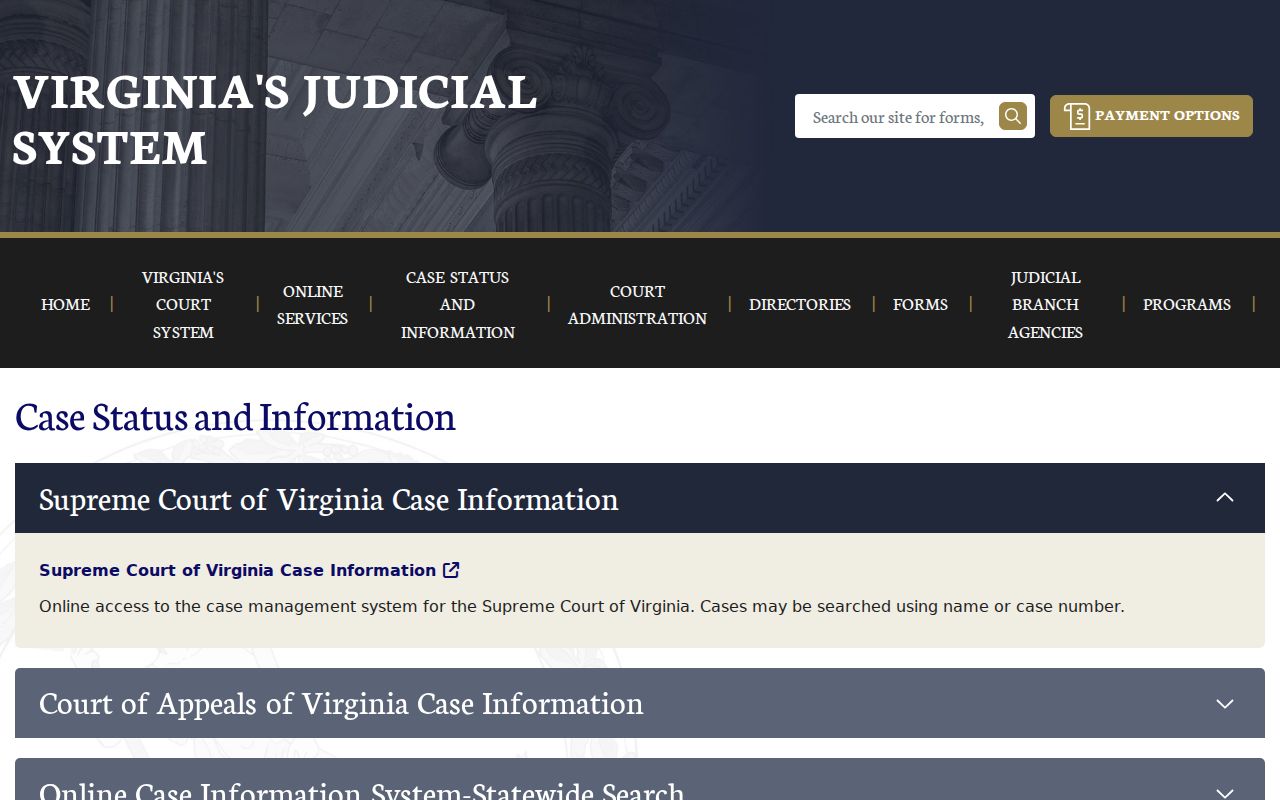
That screen is a useful reminder. A Hampton court search begins with a court and field choice, not with the assumption that every name match is the same person. The Hampton Circuit Clerk counter sits at 237 N. King Street. Call 757-727-6105 before traveling, since staff can explain terminal, copy, and payment procedure.
Note: Before contacting a Hampton clerk, keep the exact case number, court, record type, and date together so staff can locate an existing public file.
Hampton Resident Verification Steps
To look up a resident in Hampton without merging unrelated records, build a short, dated chain. Begin with a location anchor. Then add a second source with a different purpose. A parcel result and a deed may be related. They suit a property question. But they count less as independent evidence than a parcel result paired with a dated directory. Preserve each source's own role language. That habit keeps an owner, a voter, a court party, a licensee, and a historical householder from collapsing into one unsupported label.
Hampton is an independent city, while Elizabeth City County is the historical local jurisdiction. For a Hampton event before the 1952 consolidation, search both names plus Phoebus, Old Point, Kecoughtan, and East Hampton. Those labels can appear in an older deed, street directory, map, or library catalog. But the present record route runs through the City of Hampton.
- Write down the Hampton name as found, including initials, spouse, trust, estate, or historic-place variants. For events before the 1952 consolidation, also search Elizabeth City County, Phoebus, Old Point, and Kecoughtan.
- Use a Hampton parcel or dated historical source to capture a situs, parcel ID, legal description, or printed address. Mark whether the address is physical, tax mailing, household, or party address.
- Add a separate Hampton or Virginia record type, such as a court party search, deed index, directory, obituary, public credential, or eligible vital-record route. Compare the date as well as the name.
- Read the full result and record its case, document, page, parcel, or certificate reference. If a certified document is needed, ask the custodian rather than treating an index display as the document itself.
- Docket
- A court’s running record of a case and its events. A Hampton docket entry may identify a case without proving identity or revealing every file.
- Index and image
- An index lists searchable fields. An image is the scanned or viewable record itself, which may have different Hampton access, fee, or permission rules.
- Certified copy
- A copy issued and authenticated by the record custodian for a purpose that needs official certification. It is different from a search result or informal printout.
For a full street-by-street chain of records, turn to the Hampton address directory, which walks each block and parcel in order. A single identity question rarely needs that much; once the independent sources line up on the narrow point, the lookup is done.
Hampton Voter Lookup Rules
Virginia draws a hard line around voter data. The Citizen Portal exists for the voter or an authorized user. It is not an open name directory. To pull up a status, it wants a first name, last name, date of birth, the last four digits of a Social Security number, and a locality. Users must also certify they are allowed in. The form warns against unlawful computer access. Used properly, it shows registration status, address updates, polling details, and voting history. That is a private check, not a public Hampton residents directory feature.
State law opens a different door. Under Va. Code §24.2-444, the registrar list is open to inspection, but with defined fields only. Social Security data stays out of it. The day and month of birth stay out too. Protected addresses and other sensitive details stay out of it. Full copies face their own gate: §24.2-405 limits them to listed requester categories and purposes. A qualifying requester files the state form or works through the Hampton Registrar. Recipients cannot publish or redistribute the list online.
One Hampton myth deserves a quick burial. A voter field never proves present occupancy. Registration serves an election purpose. Addresses can be protected or stale. The access rules still bind everyone who uses the data.
Hampton Vital Record Windows
Hampton birth, death, marriage, and divorce records sit with the Virginia Department of Health. They are not kept in a municipal people file. The state runs a privacy clock. Birth records open to the public after 100 years. Death, marriage, and divorce records open after 25. Before then, Va. Code §32.1-271 and VDH eligibility rules decide who may order what. A genealogy index can hint at a date or relationship. It is no substitute for a current address record.
Costs and channels are straightforward. The VDH application instructions list a $15 search or copy fee for each certificate. There is no refund when no record turns up. Processing estimates can differ between VDH pages. Confirm the live fee and timing before paying. Orders go in online or by mail. Virginia DMV customer centers offer another certified-copy route for eligible applicants. Hampton's Circuit Court Clerk can field a marriage-license question. Statewide certificate rules still come from VDH.
The Virginia vital-record application page displays the official ordering path for a Hampton event.
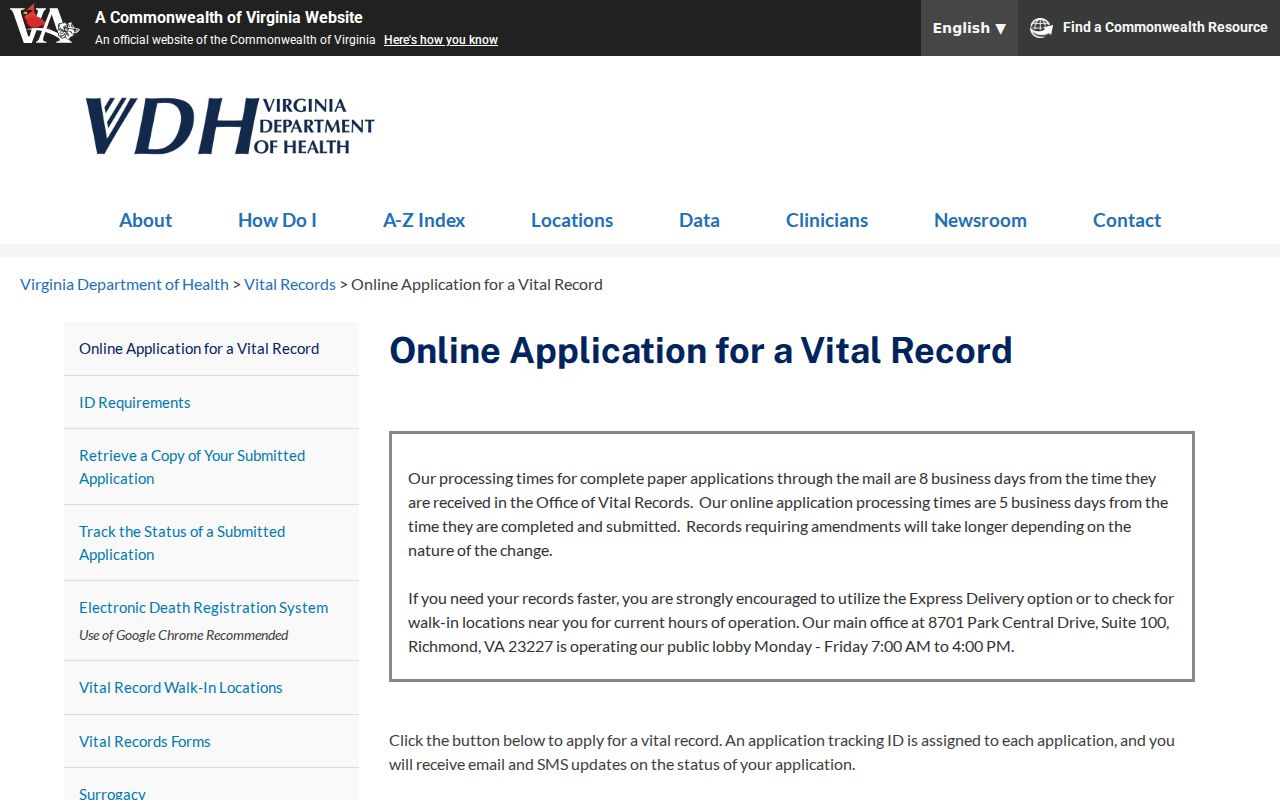
Use the application fields to pin down the right event and eligibility path. They do not mean every Hampton vital record is public. The VDH Richmond lobby, mail, and DMV customer centers are separate statewide channels. The online VVESTS route is another one. For older Hampton events, other tools do the legwork. VDH genealogy material and the Library of Virginia reading room can establish a date or relationship first. Hampton Public Library Special Collections, FamilySearch, and newspapers help too. Then an eligible requester can pursue the certificate.
Hampton License Role Checks
Public role records solve a different problem. They tell two Hampton people with the same name apart. The Virginia DPOR License Lookup supports text and advanced searching. Tips cover name, license number, address, and license type. A search there can confirm a credential, its status, and public discipline information. DPOR cautions that its displayed data is not the official record. So when the exact credential matters, follow up with the responsible board or DPOR itself.
The State Corporation Commission CIS does separate work. It searches by entity name or entity ID. It returns the ID, name, name type, entity type, address, formation date, and status. Those details can surface a public officer, registered agent, principal office, or filing relationship. Neither tool proves where someone lives. A DPOR licensee may work in Hampton while residing elsewhere. An SCC address often belongs to the entity or its agent. Resist recasting either record as a Hampton household match.
The DPOR search screen is the official starting point for a Hampton role check.
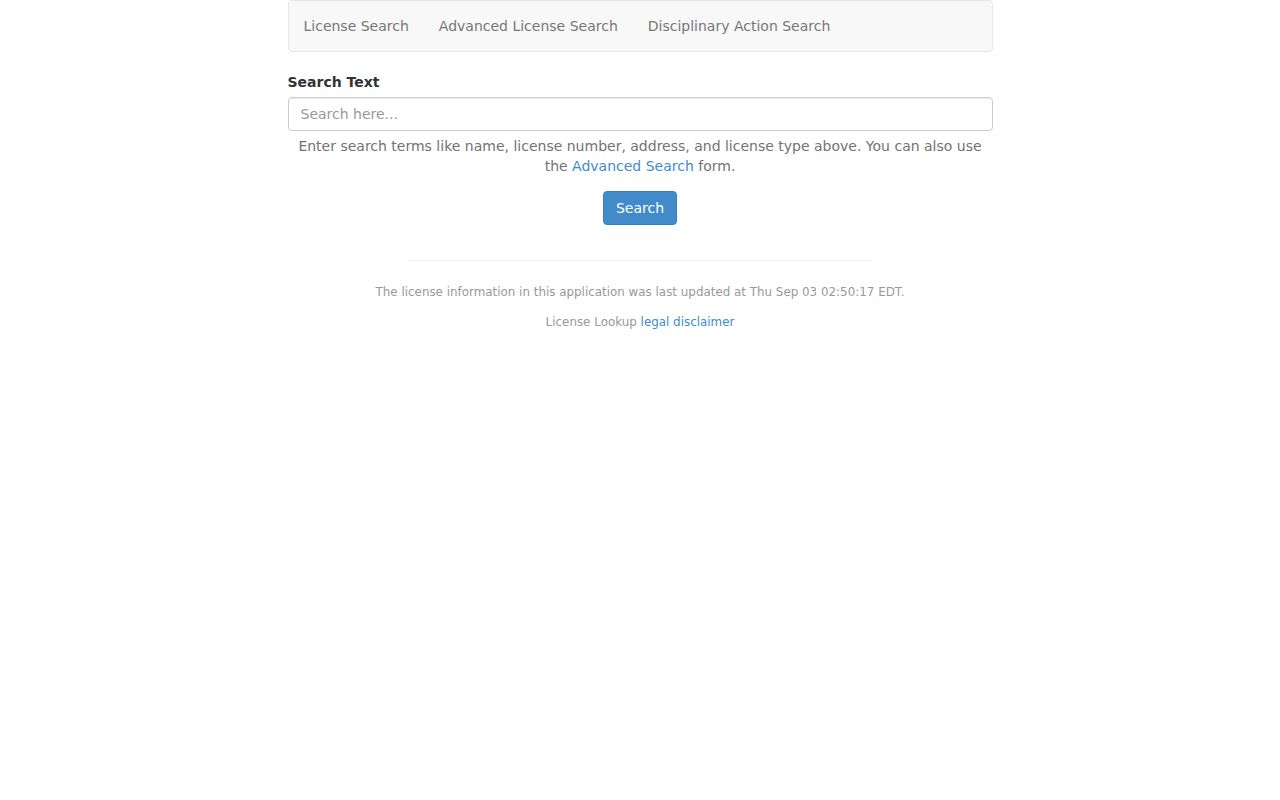
A result earns trust under two conditions. It should confirm a specific Hampton public role. It should also pair with a separate record that settles the location or identity question. Together they answer what neither record answers alone.
Note: Keep the license number or SCC entity ID with its source date, because names and public addresses can shift after a Hampton result is displayed.
Hampton FOIA Record Requests
Sometimes no public search holds the Hampton record you need. FOIA covers that gap. It lets you request an existing record from the office that holds it. The Hampton records-request route accepts the online GovQA process plus mail, fax, email, or phone. FOIA officers handle each channel. Narrow the ask by department, record type, name or parcel, date range, and any known reference number. The Virginia Freedom of Information Act generally requires a response within five working days. Defined extensions apply when more time is allowed.
FOIA has firm limits, though. It cannot force Hampton to build a new resident directory. It cannot identify a person from scattered files. Nor can it release a protected certificate, confidential address, juvenile matter, or restricted voter field. Route each request to the right office. The Assessor handles parcel records. The Circuit Court Clerk covers court and land-record procedure. The Registrar sets voter-list access rules. Community Development holds defined public map records. Under Va. Code §2.2-3704, reasonable specificity counts. Hampton may charge its actual costs for searching an existing record.
Hampton Lookup Privacy Limits
Not every Hampton record is open, and that is by design. Juvenile files stay sealed. So do many family-court matters. Voter records drop protected fields, and the law restricts who may lawfully pull a list. Vital records through VDH open only after eligibility rules are met. Virginia's Address Confidentiality Program shields qualifying survivors. It keeps their real address, phone number, and minor-child details confidential. Never try to trace a substitute address back to a protected person. A residents directory has limits, and these are hard ones.
Virginia's Consumer Data Protection Act adds another layer. It gives covered consumers rights over personal data held by qualifying controllers. Something in a record can look wrong. The fix belongs with the custodian or controller that keeps it. For Hampton court, parcel, voter, vital, or role data, hold onto the Hampton source, date, and reference. Then ask the responsible records office about its correction, redaction, or access process. A careful Hampton lookup stops at the legal line. It does not guess at what lies past it.
Lawful use. Hampton records support personal, lawful research and civic understanding. Using a name, address, or record detail to stalk, harass, intimidate, or harm someone can violate Virginia law.