
Hampton Previous Residents by Era
Begin with the source closest to the period in question. Current records establish the parcel and legal key; recent transfer rows lead to deeds; and dated directories or census schedules add household evidence. The record trail is uneven because Hampton is an independent city and earlier sources use Elizabeth City County, Phoebus, Old Point, or Kecoughtan. A result should retain the historic jurisdiction exactly as printed, then note its modern Hampton connection.
| Source | Years It Covers | Where Held | What It Shows |
|---|---|---|---|
| CivQuest parcel record | Current | Hampton Assessor and city GIS | Parcel, situs, owner or taxpayer, legal description, assessment, transfer lead |
| Property transfer PDFs | 2020-2026 | City of Hampton | Property ID, address, grantor, grantee, class, date, amount |
| Land Books and recorded deeds | Annual books; historical volumes at Clerk | Hampton Circuit Court Clerk | Tax owner, assessment, instrument parties, legal description |
| Hill directory titles | 1897-1929; 1944-45 catalog title | Hampton Library and FamilySearch catalog | Printed householder, street, place label, and period description |
| Federal census schedules | Named households through 1950 | Library and federal research collections | Household context, subject to period and address limitations |
| Elizabeth City County microfilm and chancery | Colonial-era series; chancery images 1747-1913 | Library of Virginia | Deeds, wills, courts, family relationships, property facts, and gaps |
| Sanborn maps and newspapers | Hampton sets 1885, 1891, 1916; newspaper runs vary | Library of Congress and Hampton Library | Building context, street changes, notices, obituaries, and events |
For previous residents from the last few decades, start with the selected parcel and its transfer record. For an early twentieth-century address, begin with a directory year and the matching census period, then work back to the deed or Land Book. A colonial or nineteenth-century gap calls for the Library of Virginia’s microfilm, chancery, probate, and survey material.
Hampton Parcel Keys First
Freeze the current property identity before following names backward. The Hampton CivQuest portal is the starting point for the current parcel, and the Hampton Land Book supplies annual owner, assessment, and tax information, with earlier books held by the Circuit Court Clerk. Record three distinct fields on every line of a house-history worksheet: the situs, the tax mailing address if shown, and the legal description or parcel ID.
The situs is the physical parcel location. A mailing address tells where an owner receives tax mail and may be outside Hampton. The legal description identifies the lot, subdivision, metes and bounds, or parcel, and is the key that can survive a street renaming or numbering change. A present-day owner, a grantee, and a former householder are different roles, so none should be silently substituted for another.
Trace Hampton Previous Residents
A deed chain traces ownership, not every person who lived at an address. Still, it gives the date framework needed to test a past-residents listing against a directory or census. Start with the current parcel and walk backward from the buyer’s deed to the seller’s earlier purchase. Preserve exact spelling, spouses, trusts, estates, and party roles as they appear in each instrument. Historic deeds may be filed under Elizabeth City County before the 1952 consolidation, even though the site is now in Hampton.
- Copy the current parcel ID, situs, legal description, and current owner or taxpayer from the assessor record.
- Use the property transfer PDF or Clerk index to locate the current owner’s purchase instrument. Record the grantor, grantee, date, consideration, and book/page or document number.
- Search the seller as a grantee to find the prior acquisition, then compare the legal description rather than relying only on the modern address.
- Repeat that grantee-to-grantor move for each ownership change. Stop and resolve a legal-description mismatch before joining another name to the chain.
- When the online route ends or an older jurisdiction appears, move to the Clerk’s historical books, Library of Virginia microfilm, or other listed record group.
- Grantor / grantee
- The grantor transfers an interest in property; the grantee receives it. Either party can be a trust, estate, organization, or individual.
- Chain of title
- The documented sequence of transfers for the same legal parcel, linked through deeds and their party roles.
- Legal description
- The recorded lot, subdivision, metes-and-bounds, or parcel wording. It is more stable than a street address for older Hampton records.
- Criss-cross directory
- A reverse-address arrangement that may connect a printed street address to a listed householder. Confirm that the specific volume contains it.
- Enumeration district
- The geographic area assigned to a census enumerator. It can help locate a household when a historic address does not match modern numbering.
Hampton Transfers and Clerk Access
Hampton’s Property Transfers PDFs cover calendar years 2020 through 2026. They provide an efficient recent index for an address history because the rows include the property ID, address, grantor, grantee, class, date, and amount. A row is not the deed itself. Use it to identify the instrument, then ask the Hampton Circuit Court Clerk or the recorded-land index to verify the parties and legal description.
The Virginia SRA/COVERS land-record access page documents the remote-access route and its image restrictions.
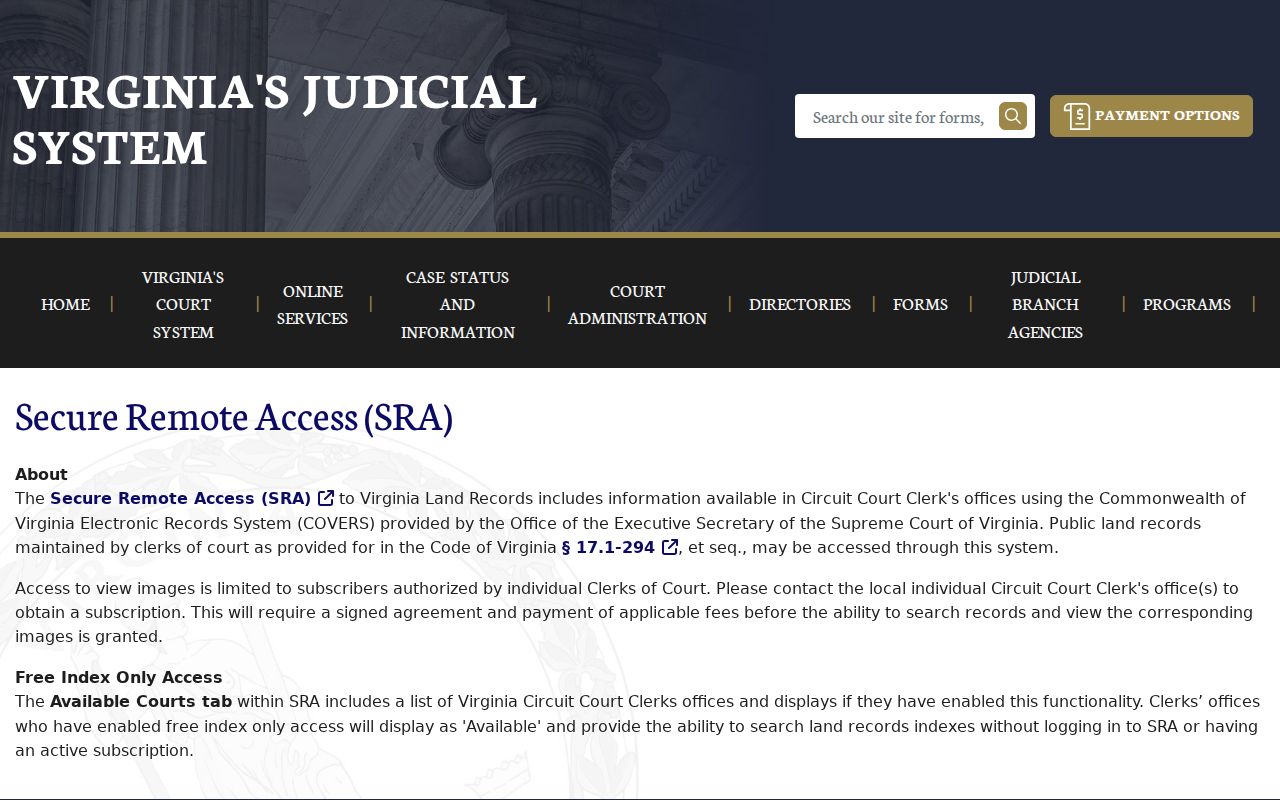
The Virginia SRA/COVERS service explains that its online database is not the official record. Remote images can require a clerk-authorized subscriber agreement and payment, and Hampton’s exact online index coverage should be confirmed with the Clerk. A missing web result may be an access limitation, not a finished chain.
Hampton Historical Deed Gaps
The Library of Virginia’s Elizabeth City County microfilm catalog is essential once the trail crosses into the historic jurisdiction. It lists deed books for 1684-1699, 1715-1721, 1721-1723, 1723-1730, 1737-1749, 1758-1764, 1763-1771, 1787-1800, 1800-1807, 1805-1819, 1820-1826, and 1825-1831, along with general indexes for 1758-1899 and surveys and plats for 1761-1883. The catalog also flags gaps, including missing deed books for 1772-1786, so a negative result has to be read in light of the reel and book coverage.
Record survival is uneven after losses associated with wars and fires. When a deed chain breaks, chancery can supply property or family facts absent from a deed book. The Library of Virginia made Hampton and Elizabeth City County chancery digital images available for 1747-1913, with indexes and original material extending later for parts of the collection. Probate, re-recorded deeds, Land Books, newspaper legal notices, and surveys are useful parallel routes.
The Library of Virginia catalog identifies the reels, record groups, gaps, and access notes behind this earlier research.
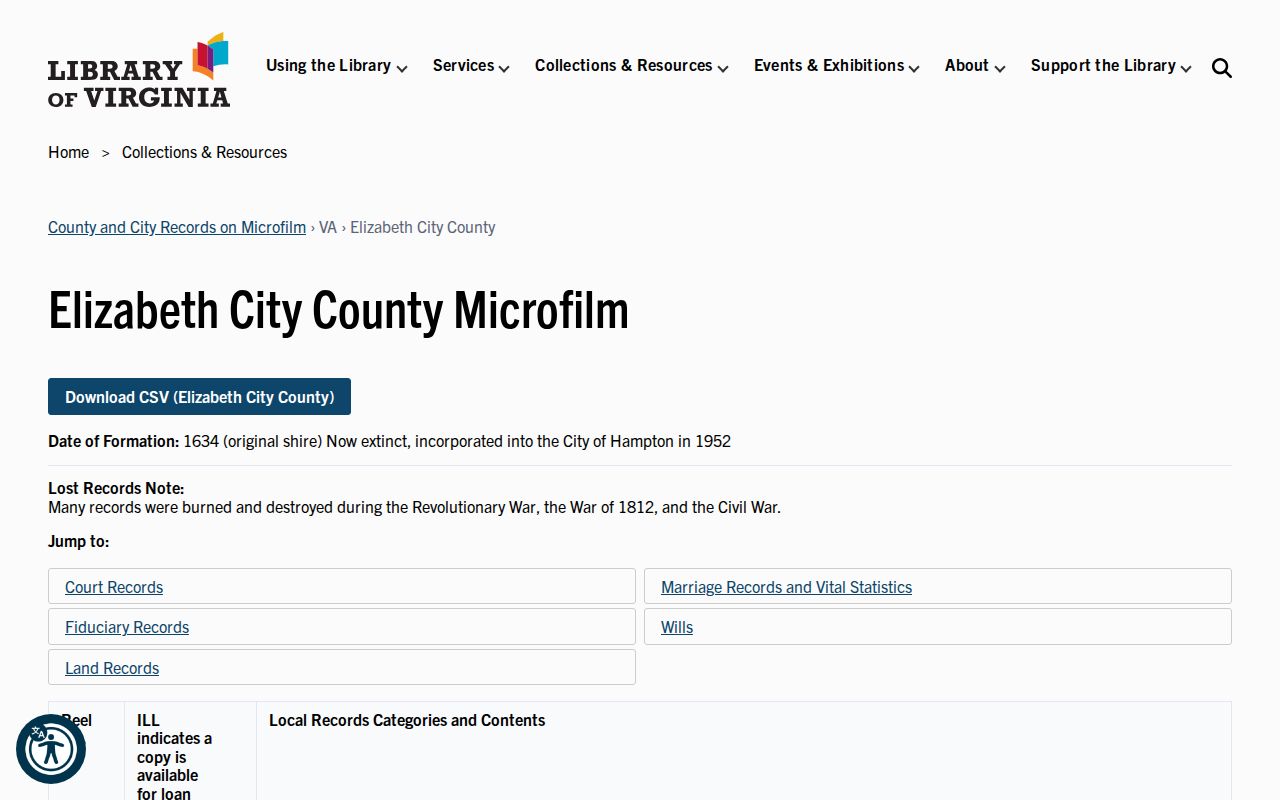
Keep the reel, volume, page, and original-versus-transcript note with every previous-residents result. Those details make it possible to assess a missing book or a variant name later.
Hampton Previous Residents in Directories
The Hill directory material gives a dated household layer to place alongside the ownership chain. The located run starts with 1897-1898, continues near-consecutively through 1920, and resumes with 1923, 1925, 1927, and 1929. A 1944-45 catalog title covers Hampton-area places as well. The catalog titles shift among Newport News, Hampton, Phoebus, Old Point, and Kecoughtan, so preserve the printed place label instead of rewriting it to modern geography.
A directory entry is a period snapshot. It can name a householder, street, or other printed descriptor, but it may also reflect a business contact, boarder, or institution. Check a reverse or criss-cross section only if the volume has one; a separate Hampton reverse-directory shelf run was not located in the official sources. The collection details belong in the Hampton city directories reference, while an address-history worksheet uses the volume and page to test a specific household date.
Hampton Sanborn and Newspaper Context
A historic map answers a different question from a name record: whether the building or lot existed, how it was labeled, what it was used for, and what stood nearby. The Library of Congress 1916 Hampton Sanborn set has 42 sheets; the Library of Congress also holds Hampton sets for 1885 and 1891. Hampton Library guides point to later Sanborn microfilm. Use the sheet date, street, footprint, and adjacent structure to test an address against a directory year.
Newspapers can add a move, death, legal notice, or neighborhood event that a deed does not explain. Hampton Library links the Daily Press full text from 1898 through its ProQuest Virginia Collection and holds New Journal and Guide microfilm for 1916-1930. Its obituary index is a lead rather than final proof, so compare the original notice, directory year, deed, or vital-record route before treating an identity as settled.
Hampton Past Households
Ownership is only one part of a past-residents question. Pair a directory year with the closest census schedule, then use the address, printed place label, and household names to see whether the records agree. Before 1850, federal schedules generally identify only household heads, and Virginia’s 1790 and 1800 returns are missing. Later schedules, directories, and newspapers can offer more detail, but each must be dated and evaluated on its own terms.
- Choose the directory volume nearest the proposed household period and copy the entry exactly, including initials and abbreviations.
- Locate the corresponding census year or the nearest available schedule, using the historic place label and enumeration district when the modern address does not fit.
- Compare the deed-chain owner and legal description with the map and street evidence. Mark an owner and a listed householder as separate roles if they differ.
- Use an obituary, newspaper notice, probate file, or library source to explain a move, death, estate transfer, or address change without inventing continuity.
Lawful use. Hampton previous-residents research is for personal house history, family history, and civic curiosity. Do not use historical or current records to stalk, harass, track, intimidate, or harm a living person.
Hampton Special Collections Fallback
When the online trail does not resolve an address, Hampton Public Library Special Collections holds local directories, newspapers, census indexes, Sanborn maps, wills, deeds, vital-record resources, yearbooks, and local-history material. The Virginiana Room is at the rear of the Main Library’s second floor, and appointments are recommended for genealogy computers. Staff can help distinguish a catalog lead from an original source, especially when a directory title uses an earlier Hampton-area place name.
For a focused historical question, the library’s research-request process is mail-only: send a specific name, date, or event with a self-addressed stamped envelope. The library performs preliminary lookups from its own resources and does not take those requests by email, web, or phone. The Special Collections page is the better first stop for current access information.
Note: A narrow question with a parcel, historic street spelling, date range, and known surname gives an archive search a defined record trail to check.